
The Gardens Trust Statutory Consultee Removed

Response to the Government’s decision on proposals to remove the Gardens Trust as a statutory consultee – The Gardens Trust

By Frankie Taylor

The Gardens Trust is devastated by the Government’s announcement today that its role as a statutory consultee in the English planning system is being removed.

We are particularly concerned that proposals affecting the setting of parks and gardens will be excluded from the intention to notify us of planning applications. This puts the nation’s designed green space, created and enjoyed over hundreds of years, at immediate risk of harm through poorly-informed development.

Landscapes at risk

This will impact on the views to and from parks and gardens and the peace and tranquillity in which they can be enjoyed.

These places include internationally famous and locally loved parks and gardens such as Hyde Park in London, Painshill in Surrey, Heligan in Cornwall, Chatsworth in Derbyshire, Wicksteed Park in Northamptonshire, Sheffield Botanical Gardens in Yorkshire, Birkenhead Park on the Wirral and Leazes Park in Newcastle.

The Gardens Trust’s Chair, John Watkins, said: “It’s devastating news that the Government has removed key protection for parks and gardens by ending the Gardens Trust’s role as statutory consultee. This devalues these special places and makes them vulnerable to poorly informed development. We do however welcome the Government’s recognition that we play an important part in the planning process and will strive to continue to offer advice to local planning authorities on ways to ensure that historic parks and gardens can survive to support communities today and in future but the Government’s decision means that this will be limited to development within the green spaces themselves rather than including setting. This removes protection for the views to and from them, and for the peace and tranquillity in which people can enjoy them.” You can read more about the importance of setting here.

The importance of parks and gardens

Parks and gardens have key roles in addressing issues facing us all in the 21st century, such as:

  • Growing the economy: historic parks and gardens support well-designed development with ready-made access to pre-existing greenspace. They also add hugely to the UK’s tourism economy, being one of the biggest drivers in this field, nationally and internationally.
  • Helping to ameliorate the impacts of climate change. For example, parks and gardens with mature historic trees will play an increasingly important role as they provide shade and cooling islands in and around urban areas.
  • Supporting nature recovery, particularly in our cities, where established older landscapes can provide established complex habitats.
  • Playing an important role in social cohesion as public green space offers places for people to come together and build communities, as well as offering places for wellbeing, play and recreation for all. Public parks were created to support rapidly expanding cities in the 19th century, 1920s and post war period and will be critical to the success of 21ST century urban expansion and concentration.
  • Ensuring that the NHS is fit for the future, because parks and gardens help reduce demand on the NHS by offering free-to-access places to exercise and enjoy fresh air, critical for health and wellbeing.
  • Nurturing opportunity for all, because not only does an active parks and gardens sector support inclusive access to leisure but it also offers a range of accessible career pathways.

They are also important heritage assets, helping us to understand and tell the story of our society, bringing communities together with a shared narrative, and showcasing the best of creative design from generations before us so that we can together learn from them for the future.

The Gardens Trust’s statutory consultee role

Since 1995 the Gardens Trust has been a statutory consultee in the English planning system, providing the primary mechanism for protecting the nation’s historic parks and gardens. As a statutory consultee, local planning authorities and the Planning Inspectorate must consult the Gardens Trust in relation to all planning applications that may affect historic designed landscapes on the national Register of Parks and Gardens of Special Historic Interest in England.

The Gardens Trust is the statutory consultee for sites on the Register at all Grades – Grade I, II* and II. (Historic England is additionally a consultee for Grade I and II*, but the Gardens Trust is the only consultee to also cover Grade II sites, which make up c65% of Registered sites.)

The Gardens Trust’s work supporting the planning system is delivered by a small team of part-time conservation officers, supported by a committee of expert national volunteers and 35 County Gardens Trusts who bring around 800 highly-active volunteers. The Gardens Trust receives a Government grant of approximately £45,000 to support its planning system work. The cost of all local planning authorities having to deliver this service themselves is estimated at £3,692,846 per annum.

The threat to historic parks and gardens by removing the Gardens Trust’s statutory consultee role is removed is huge.

  • Despite the advances of the National Planning Policy Framework (NPPF) and Planning Practice Guidance (PPG), Registered Parks and Gardens do not benefit from a specific consent regime such as listed building consent, scheduled monument consent or conservation area consent.
  • The statutory consultee role has acknowledged the significance of Registered Parks and Gardens in their own right as well as providing the context and setting of archaeology and buildings.
  • The Levelling Up and Regeneration Act, 2023 recognises this, and categorises a Registered Park and Garden as a “relevant asset” (s.58B). This would mean a Local Planning Authority or the Secretary of State would need to have “special regard to the desirability of preserving or enhancing the asset or its setting” when determining any development affecting such an asset or its setting. But this has yet to be enacted.
  • Without proper consideration of Registered Parks and Gardens in the planning system through the statutory consultee role, the checks and balances of the planning system will be eroded and in particular the many much-loved Grade II sites will experience greater vulnerability.
  • much-loved Grade II sites will experience greater vulnerability.
Thanks to The Gardens Trust and Buckinghamshire Gardens Trust for sharing this post.


The Garden Museum

New talk! The Beth Chatto Approach to Ecological Planting in Public Spaces

Join us for an evening in conversation with Julia Boulton, CEO of Beth Chatto’s Plants & Gardens; John Little of the Grass Roof Company; Daryl Moore of Cityscapes, wildlife advocate Chris Gibson and Labour MP for Colchester Pam Cox, as they explore the power of ecological planting to transform the places we live, work and share.

At a time when our public spaces are expected to do more than ever – for people, wildlife and the climate – this discussion will examine how thoughtful planting can reshape neglected urban landscapes, streets, parks and new residential developments into vibrant, resilient places that are rich in character, support biodiversity, and foster stronger connections between communities and the natural world.

Drawing on Beth Chatto’s philosophy of “right plant, right place”, the speakers will explore how the ethos that defines Beth Chatto’s Plant & Gardens has inspired projects far beyond the garden gates. Moderated by Julia Boulton, the panel will examine how thoughtful design, resilient plant communities and sustainable horticultural practises can create public spaces that are both beautiful, biodiverse and enduring.

Tuesday 8 September, 6.30pm
Livestream available

To book click here


La Mortella: A garden rooted in music and passion

Ahead of her talk at the Garden Museum on 22 September, Alessandra Vinciguerra, Director of La Mortella Gardens, shares an introduction to the garden in a sheltered valley on the island of Ischia.

“Few gardens achieve such a rare balance between landscape, architecture and botany that they feel not merely designed, but composed. La Mortella, on the island of Ischia in the Bay of Naples, is one of those exceptional places. Created from the mid-1950s by the British composer Sir William Walton and his Argentine wife Lady Susana Walton, it has earned an international reputation for its remarkable botanical collections and the unique harmony between nature, music and landscape. More than a collection of plants, La Mortella is a living expression of creativity, where nature, music and art exist in perfect harmony…”

Further information here

OGT member publishes a booklet about her former home ‘Rush Court Gardens’, Rush Court
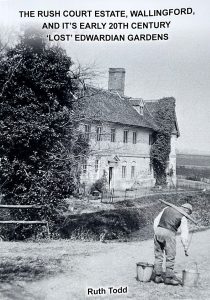
Ruth Todd, a long-time member of the Oxfordshire Gardens Trust, has just published a booklet of the history of the garden around her former family home ‘Rush Court Gardens’.  Rush Court

and its gardens are situated near Wallingford.  Apart from two walled gardens, a river front, a lake, and a moat, the garden also contains the remains of a designed Italianate garden to the rear of the house.  The booklet also includes history of the families who lived and worked in the house and surrounding area.

Ruth completed an MA in Garden History at Birkbeck University of London and has been involved in research projects for OGT for many years, including the Walled Gardens Project and CB300.  As well as researching for OGT she is also a garden guide for Chiswick House  and gardens in London.  The publication illustrates the importance of research in documenting and recording gardens that may be completely lost in the future.

If anyone would like to buy the booklet, please get in touch with Ruth at abc123rit@hotmail.com.  The book costs £5 + postage (approx £2).
 

From Fame to Obscurity: The Rise and Fall of Charles Bridgeman

A Landscape Architect of the Eighteenth Century, Charles Bridgeman (c.1685-1738)

By Susan Haynes

Series: Garden and Landscape History, Series Vol. Number: 15

An examination of the garden plans of eighteenth-century landscape architect Charles Bridgeman, shedding light on his artistic vision and contributions to English garden history.

Hardback, paperback and eBook editions available. Imprint: Boydell Press


Jinny Blom is our newest patron

We are delighted to welcome Jinny Blom as a new patron to Oxfordshire Gardens Trust.  Jinny brings a wealth of experience through her garden and landscape designs from cities to deserts, from palaces to courtyards.  Her vision is always dramatic but sympathetic, her designs working with nature (the world) not against it but deeply for it and her work ethic, honest and kind.   In addition to horticulture, she is Artist in Residence for CW + Chelsea and Westminster Hospital as well as a member of the Therapeutic Landscapes Network and The Art Workers Guild.  Jinny was nominated Woman of the Year in 2002, 2007, and again in 2013 for her contribution to society through her work. The OGT is extremely lucky to have her join us.  Thank you, Jinny Blom.